
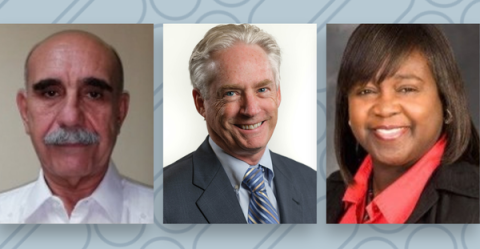
Join Anita Moncrease, MD, professor of internal medicine and pediatrics at Wayne State University, on Monday, October 12, 2026, 7:00–8:00 p.m. for a compelling presentation exploring the profound impact and historical significance of Black medical schools and departments in the United States.
The lecture begins with a look at the world’s earliest medical institutions in Africa before turning its focus home to examine how Michigan physicians played a vital role in shaping the nation's Black medical education landscape.
Key Highlights:
- Henry Fitzbutler, MD: The first African American graduate of the University of Michigan School of Medicine and founder of Louisville National Medical College—the first Black-owned and operated medical school in the United States.
- Charles Burleigh Purvis, MD: Second Black faculty member at Howard University Medical Department (and uncle to University of Michigan Class of 1911 graduate Augustus G. Purvis, MD) who became the first African American physician to treat a sitting President following the shooting of James A. Garfield in 1881.
- Anderson Ruffin Abbott, MD: University of Michigan medical alumnus who attended to President Abraham Lincoln on his deathbed and later served as surgeon-in-chief at Provident Hospital in Chicago, America’s first Black-owned and operated hospital.
Please register to receive the link.
MSMS Goes International – Cancer Immunotherapy from Cuba
The Michigan State Medical Society (MSMS) has partnered with medical colleagues abroad. On October 12, 2026, 8:00–8:45 p.m. (immediately following the History of Medicine), Rolando Perez, MD, the current vice president of the Cuban Academy of Sciences, has prepared a video presentation specifically for MSMS members. He is a molecular biologist who conducted postgraduate research at the University of Nice in France and Uppsala University in Sweden. He has published more than 200 scientific articles and is considered a pioneer in the field of cancer immunotherapy.
Cuba is well known for its investment in primary care, but less well known is its substantial investment in biomedical research and pharmaceutical development. Cuban scientists have made notable contributions in areas including vaccines, immunology, infectious diseases and cancer research.
Despite the longstanding challenges in U.S.-Cuba relations, academic and educational exchanges between the two countries remain possible under U.S. regulations. Doctor Perez's lecture originated from an educational exchange offered to MSMS last year. Because of the ongoing challenges with Cuba's electrical grid and internet connectivity, the lecture has been prerecorded.
Please register to receive the link.
All of these presentations will be recorded, so those unable to attend the live sessions will still be able to view them at a later date.
Need assistance? Contact the MSMS Education team at 517-336-5790 or educationdept@msms.org.