
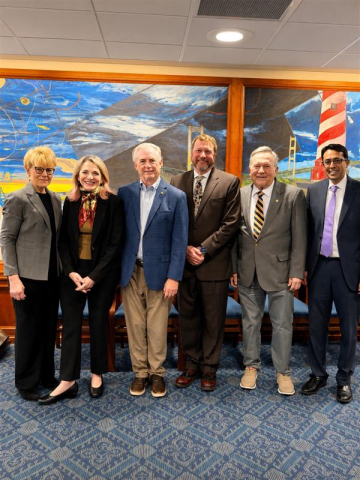
The Michigan House Health Policy Committee met Wednesday, September 23, 2026, to discuss legislation focused on health care workforce and training needs across the state.
Lawmakers discussed HB 5488 and HB 5489, introduced by Representatives Angela Witwer (D-Delta Twp) and Dave Prestin (R-Cedar River), respectively, which would allow individuals to become licensed as medical first responders and emergency medical technicians beginning at age 17, with a parent or guardian signature required for applicants younger than 18. The bills would create an earlier pathway for individuals interested in entering Michigan’s emergency medical services workforce.
The committee also considered HB 6156, sponsored by Representative Jamie Thompson (R-Brownstown Twp), which would create an individual income tax credit for certain advanced practice registered nurses who serve as clinical preceptors. Under the legislation, eligible preceptors could receive a $500 tax credit per student, for up to three students. The proposal is intended to support Michigan’s health care workforce pipeline by encouraging more nurse practitioners to take on students for clinical training.
Representatives from the University of Michigan School of Nursing, Michigan State University College of Nursing, and the Michigan Affiliate of the American College of Nurse-Midwives submitted testimony on HB 6156, emphasizing the need to expand clinical preceptor capacity. Representative Prestin expressed interest in supporting the legislation. During the discussion, Representative Matthew Bierlein (R-Vassar) raised a concern about why the proposal does not include other health professional students, such as medical students, physician assistant students, and many more.
Although HB 4832, which would establish licensure for anesthesiologist assistants, appeared on the committee’s posted agenda and received substantial written testimony, the bill was not taken up for discussion during the meeting.
Given the upcoming election, legislative observers do not expect much legislative activity until after the election. The Michigan State Medical Society (MSMS) will continue educating legislators and candidates on the importance of high-quality medical care for all patients in Michigan.
For further information on these and other legislative issues, please contact Kate Dorsey, Director of Government Relations, at 517-336-5737 or kdorsey@msms.org. You can also visit MSMS.org/advocacy to view bills that MSMS is currently monitoring for their potential impact on Michigan physicians, practices, and patients.