
News & Media
Four Essential Topics for the Prevention of COVID-19 in Immunocompromised Individuals
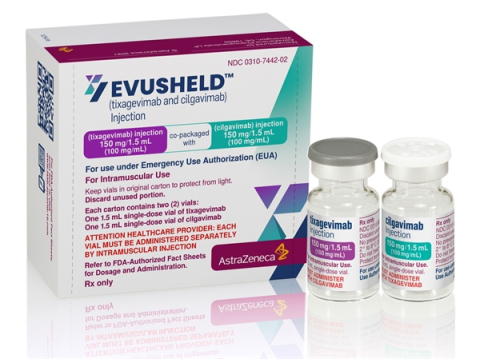
Addressing the unmet needs of immunocompromised individuals seeking COVID-19 protection – EVUSHELD TM overview and resources
COVID-19 restrictions are lifting across the U.S. driven by decreasing hospitalization rates. Despite this welcomed return to normalcy for most people in the United States, immunocompromised individuals still suffer higher risks of hospitalization and death from COVID-19.1,2 This is due, in large part, to a reduced response to currently authorized vaccines. Despite recommended vaccination and boosting, immunocompromised individuals are still at risk for severe COVID-19 and need added protection.
The U.S. government has been working to supply additional COVID-19 therapies for the approximately 7 million highest risk, immunocompromised Americans.3 The success of both preventive and treatment therapeutics is based on public and healthcare provider education and awareness. Increased access is the first part of the equation. Here are four updates that you should know on the current landscape of COVID-19 prevention for immunocompromised individuals.
1. What is EVUSHELD TM?
EVUSHELD is a long-acting antibody combination under Emergency Use Authorization (EUA) for pre-exposure prophylaxis (PrEP) for the prevention of COVID-19 in immunocompromised populations. It is a combination of two potent, monoclonal antibodies, tixagevimab and cilgavimab, against SARS-CoV-2 that is administered via two intramuscular injections. EVUSHELD is designed to provide pre-exposure protection against COVID-19 to those who are not expected to mount an adequate humoral immune response to currently authorized COVID-19 vaccines.
In multiple independent laboratory studies using both pseudovirus and live virus assays, EVUSHELD retained neutralizing activity against Omicron subvariants, as well as the original strain and all SARS-CoV-2 variants of concern defined by the WHO to date. Notably, EVUSHELD effectively neutralizes the increasingly prevalent BA.2 subvariant in live virus assays.
2. Who is eligible to receive EVUSHELD TM?
Immunocompromised adult and pediatric individuals 12 years of age and older (weighing at least 40 kg) who are not infected with SARS-CoV-2 are eligible to receive EVUSHELD for PrEP. For those who recently received a COVID-19 vaccine dose, whether it is a first, second, or booster dose, FDA advises to wait two weeks before administration of Evusheld.
There are a range of conditions that compromise the immune system, from underlying disease to immune suppressing treatments that qualify a patient to receive Evusheld; in addition, the rare individual for whom a COVID-19 vaccine causes a severe reaction is also a candidate. Patients eligible for Evusheld include, but are not limited to, those with medical conditions or receiving immunosuppressive therapies listed below:
- Active treatment for solid tumor and hematologic malignancies
- Receipt of solid-organ transplant and taking immunosuppressive therapy
- Receipt of chimeric antigen receptor (CAR)-T-cell or hematopoietic stem cell transplant (within 2 years of transplantation or taking immunosuppression therapy)
- Moderate or severe primary immunodeficiency (e.g., DiGeorge syndrome, Wiskott-Aldrich syndrome)
- Advanced or untreated HIV infection (people with HIV and CD4 cell counts <200/mm3, history of an AIDS-defining illness without immune reconstitution, or clinical manifestations of symptomatic HIV)
- Active treatment with high-dose corticosteroids (i.e., ≥20 mg prednisone or equivalent per day when administered for ≥2 weeks), alkylating agents, antimetabolites, transplant-related immunosuppressive drugs, cancer chemotherapeutic agents classified as severely immunosuppressive, tumor-necrosis (TNF) blockers, and other biologic agents that are immunosuppressive or immunomodulatory (e.g., B-cell depleting agents)
For reference, see the NIH Guidelines Panel’s prioritization of the most at risk for severe outcomes due to compromised immune systems. More information on EVUSHELD, including HCP fact sheets and the FDA Letter of Authorization, is available at EVUSHELD.com.
3. USG supply and access
The U.S. government recently purchased an additional 1 million 300mg doses of EVUSHELD, for a total of 1.7 million 300mg doses, for distribution to states, territories, and jurisdictions across the U.S. under the current EUA. EVUSHELD is allocated monthly to all U.S. states and territories based on population. State and territorial public health administrators determine how much EVUSHELD goes to each individual site within their jurisdictions. Sites receiving EVUSHELD, as well as other COVID-19 therapeutics under EUA, can be found online via the HHS COVID-19 Therapeutics Locator.
Licensed physicians, advanced practice registered nurses, and physician assistants authorized to prescribe anti-infective drugs can prescribe EVUSHELD for pre-exposure prophylaxis of COVID-19. Although the HHS COVID-19 Therapeutics Locator maps specific sites of distribution pre-selected by each state/jurisdiction for allocation, transfer of EVUSHELD between different sites and states within the US, following statutory regulations, is allowed. While media focus on some metropolitan medical centers implementing lottery systems for EVUSHELD administration has recently dominated the news, effort is underway to increase product awareness and availability in less urbanized areas, including rural communities. This includes new EVUSHELD education materials, including webinars and meetings for primary care providers and specialists who are key to reaching these vulnerable, immunocompromised patients.
4. Resources
There is a critical need to further educate and raise awareness among the immunocompromised populations around the only authorized COVID-19 pre-exposure product, EVUSHELD, through their providers. Your partnership is greatly appreciated.
We recognize the importance of continued discussions and collaboration at the state level on access and allocation of EVUSHELD, keeping equity as the top priority. The State of Maryland shared their implementation of EVUSHELD as an example and resource.
- The COVID-19 Therapeutics Locator for locating and mapping out the nearest available Evusheld doses across the US was designed for health care providers, but can be accessed by patients and caregivers as a reference. Providers also are encouraged to contact local sites and local patient groups.
- HHS/ASPR COVID-19 Therapeutics Stakeholder Updates include recurring webinars and update calls with live Q&A sessions on authorized COVID-19 therapeutics, including Evusheld. Please email ASPR to request an invitation and/or recordings.
- The NIH Guidelines Panel’s prioritization of the most at risk for severe outcomes due to compromised immune systems.
- The IDSA outpatient treatment roadmap includes Evusheld for immunocompromised patients.
- The CDC has posted guidance on Evusheld in the context of vaccination on their interim clinical considerations page and information on COVID-19 treatments in their Health Alert Network archive.
- The ASPR also provides an online Evusheld resource page.
- Providers can email questions to Covid19therapeutics@hhs.com.
Nellie Byun, Ph.D. and Derek Eisnor, M.D.
Biomedical Advanced Research and Development Authority (BARDA), in the HHS Office of the Assistant Secretary for Preparedness and Response.
References
1 Vijenthira et al. Outcomes of patients with hematologic malignancies and COVID-19: a systematic review and meta-analysis of 3377 patients. Blood (2020) 136 (25): 2881–2892. doi: 10.1182/blood.2020008824
2 Conway et al. SARS-CoV-2 Infection and COVID-19 Outcomes in Rheumatic Diseases: A Systematic Literature Review and Meta-analysis. Arthritis Rheumatol (2021) doi: 10.1002/art.42030.
3 Harpaz et al. Prevalence of Immunosuppression Among U.S. Adults, 2013. JAMA (2016) 316(23):2547-2548. doi: 10.1001/jama.2016.16477