
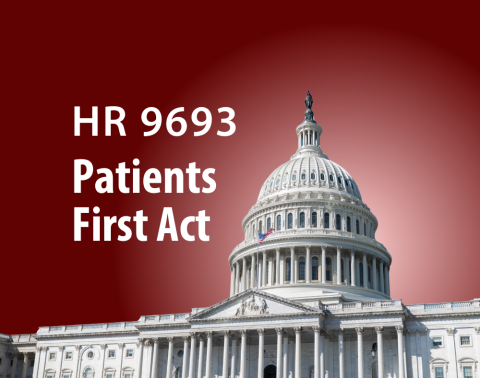
On July 15, 2026, the bipartisan Doctors Caucus chairs—Representatives John Joyce, MD, Greg Murphy, MD, and Kim Schrier, MD—introduced the Patients First Act, a comprehensive proposal to reform the Medicare Access and CHIP Reauthorization Act (MACRA) and the Medicare physician payment system. If enacted, the bill is positioned to make a number of changes to positively impact access to care including a greater investment in primary care, an annual positive inflationary updates for Part B physician payment, and a higher threshold for triggering budget neutrality.
In light of a 33 percent inflation-adjusted cut to Medicare physician payment since 2001 and repeated Medicare reimbursement cuts during this time, the Michigan State Medical Society (MSMS) has joined with the American Medical Association (AMA) and other state and specialty societies to advocate for solutions to stabilize physician payment and protect access to care. The jointly supported comprehensive framework for reform, Characteristics of a Rational Medicare Payment System, outlines the key elements of a sustainable, predictable payment system. MSMS is optimistic that the Patients First Act offers the potential for implementing long-term reforms aligned with the recommendations in the framework.
Provisions in the Patient First Act:
- Tie physician reimbursement to an inflationary measure.
- Establish a primary care hybrid payment pilot program that pays primary care physicians a per-member-per-month payment along with regular services, better capturing the work they do.
- Establish the Patient Outcome Improvement National Tabulation System (POINTS) program, which creates a physician and clinician-led task force at CMS to develop quality metrics that are streamlined and reduce administrative burden.
- Freeze current Alternative Payment Model (APM) participation thresholds for three years
- Create notice and comment periods for Center for Medicare & Medicaid Innovation (CMMI) mandatory models.
- Increase the budget neutrality threshold from $20 million to $54.3 million.
To learn more about this recently introduced legislation, purview the following materials made available by the respective Congressional offices:
- Section-by-section summary
- Legislative text
- Link to Doctors Caucus Chairs press release: https://johnjoyce.house.gov/media/press-releases/drs-joyce-murphy-and-schrier-introduce-bipartisan-patients-first-act
Questions can be directed to Stacey P. Hettiger, MSMS Senior Director of Advocacy and Payor Relations, at shettiger@msms.org or 517-336-5766