
News & Media
AMA 2025 Interim Meeting Update
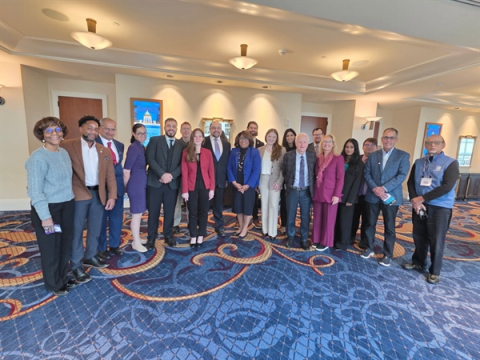
This year’s American Medical Association (AMA) Interim Meeting included reports and resolutions on a number of timely topics from augmented intelligence to rural health challenges and an unexpected visit from the Centers for Medicare & Medicaid (CMS) Administrator Mehmet Oz, MD, MBA. As always, the Michigan Delegation to the AMA enthusiastically represented Michigan’s physicians at the House of Delegates reference committees and business sessions.
The following is a statement from the AMA attributable to Bobby Mukkamala, MD, AMA President and former Michigan State Medical Society (MSMS) President and Board Member:
“We appreciate CMS Administrator Dr. Oz joining us and outlining a vision for collaboration. His physician’s perspective on prior authorization, documentation, hospital payments, and lagging physician reimbursement resonated across the House. At the same time, we will remain engaged where we have differences: opposing Medicaid cuts, advocating for a permanent Medicare payment fix that reflects the cost of running a practice, and preventing coverage loss while rooting out fraud. We welcome his call for feedback and look forward to working together on evidence-based solutions that protect patients and sustain physicians.”
Michigan’s Delegation actively covered a combined 161 resolutions and reports that were considered amongst six reference committees. MSMS President Amit Ghose, MD, served on Reference Committee C (Medical Education), Patricia Kolowich, MD, served on Reference Committee J (Medical Service and Practice), and Aliya Hines, MD, was a teller. Also, Michael Chafty, MD, JD, Betty S. Chu, MD, MBA, and Lou C. Edje, MD, MHPE, FAAFP, continued to represent their respective AMA Councils (Legislation, Medical Service, and Medical Education, respectively).
Michigan’s three resolutions were all adopted. Resolution 202 asks the AMA to recognize that without sufficient guardrails, deepfake technology can have harmful consequences and to support efforts and organizations in the creation of necessary protections. Resolution 301(as amended) asks the AMA to encourage the LCME, COCA, AAMC, and AACOM to continue work on standardized work hour policies for medical students including shift length, mandatory rest periods and total weekly hours. Finally, Resolution 802 resets the 10-year policy window on existing AMA policies supporting the patient-physician relationship and the patient’s choice of physician.
RESOLVED, that our American Medical Association recognize that while there are documented advantages of deepfake technology for medical education, training, and patient engagement, there currently exists a significant regulatory void, and such lack of oversight can result in harmful consequences, including the manipulation of patients, the spread of misinformation, and the potential for injury or death (New HOD Policy); and be it further RESOLVED, that our AMA support relevant organizations including healthcare professionals, technology developers, government regulators, social media platforms, and the public, to formulate comprehensive federal legislation and regulations regarding deepfake technology to uphold the integrity of the medical profession against malpractice, increase awareness of the risks associated with deepfake content, and safeguard patient well-being across all communities. (Directive to Take Action)
For more meeting highlights, click here. To hear addresses to the House of Delegates from Doctor Mukkamala and AMA CEO John J. Whyte, MD, MPH, visit the AMA Press Center.