
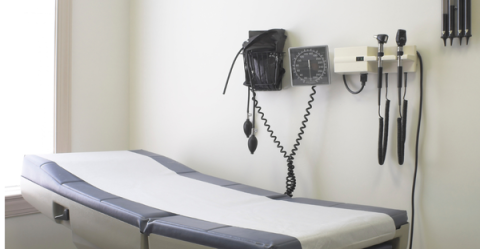
In last week’s Medigram, the Michigan State Medical Society (MSMS) reposted a published article from The Doctors Company (TDC) on the HHS Accessibility Rule outlining key obligations under the rule and highlighting practical steps physicians can take to reduce risk and ensure compliance across care settings. With a July 8, 2026 deadline pertaining to accessible exam table and weight scale requirements fast approaching, we are taking a closer look at what physicians and their practices need to know.
Background
The accessible exam table and weight scale requirements are part of a broader effort to update, clarify, and strengthen the U.S. Department of Health and Human Services’ (HHS) implementing regulation for Section 504 of the Rehabilitation Act of 1973 (Section 504). The governing final rule, Nondiscrimination on the Basis of Disability in Programs or Activities Receiving Federal Financial Assistance, was published on May 9, 2024, and took effect July 8, 2024. Other changes in the final rule clarify physicians’ and other healthcare providers’ non-discrimination obligations. For example, clinically appropriate treatment for a qualified individual with a disability cannot be denied or limited “when the denial is based on bias or stereotypes, a belief that the individual will be a burden on others, or a belief that the life of an individual with a disability has a lesser value than the life of a person without a disability. The rule also prohibits the denial of treatment to a person with a disability when the same treatment would be offered to a similarly situated person without a disability, provided that the disability does not impact the effectiveness, ease of administration, or have a medical effect on the condition to which the treatment is administered.”
Additionally, according to HHS’ fact sheet, Section 504 now includes regulatory provisions that mirror the Americans with Disabilities Act’s requirements for public and private health care providers and social service providers. As a result, physicians and other providers will now have many of the same disability non-discrimination obligations under both laws.
Although the compliance deadline for accessible exam table and weight scale requirements is July 8, 2026, other requirements for accessible medical diagnostic equipment (MDE) are already in effect. Currently, when most practices purchase, acquire, rent, or lease MDE, the new MDE must meet the accessibility requirements until 10 percent of the total number of units (but no fewer than one unit) of each type of MDE meets the standards, or 20 percent for those specializing in treating mobility-related conditions. The above-mentioned fact sheet states:
“MDE includes examination tables, examination chairs (such as chairs used for eye examinations or dental examinations), weight scales, mammography equipment, X-ray machines and other radiological equipment commonly used for diagnostic purposes by health professionals. The Department has adopted the standards for accessible MDE established by the U.S. Access Board under Section 510 of the Rehabilitation Act (Standards for Accessible MDE).”
The rule applies broadly to healthcare providers receiving federal financial assistance (e.g., participating in Medicaid, Children’s Health Insurance Program (CHIP), Medicare, or other government funding programs), including, but not limited to, hospitals, medical and dental offices, and individual healthcare professionals. According to HHS estimates, 92 percent of doctors, 43 percent of dentists, and all hospitals receive federal financial assistance and, therefore, are required to comply with the rule.
Accessible Exam Table and Weight Scale Requirements – What Physicians Need to Know
- The compliance deadline is July 8, 2026.
- Physicians’ practices that use exam tables and weight scales must have at least one accessible examination table and one accessible weight scale in place that meet the standards for MDE.
- To be compliant, exam tables must meet all the Standards for Accessible Medical Diagnostic Equipment including M301 of the standards which provides details on MDE for patients in supine, prone, or side-lying position.
- To be compliant, weight scales must meet all the Standards for Accessible Medical Diagnostic Equipment, including M303 of the standards which provides details on MDE for patients seated in a wheelchair.
- Practices cannot deny health care services to a patient with a disability due to lack of accessible MDE.
- Staff must be trained to operate the accessible MDE and must assist patients with disabilities in using the equipment, including transferring to and being positioned properly on the MDE.
- MDE must be located where it is readily accessible and usable by patients with disabilities. Equipment should not be located where it may delay or hinder access to care.
- The requirements apply to physicians’ practices of all sizes who are recipients of HHS funding.
- Non-compliance with the requirements for accessible MDE can place physicians and their practice at significant legal and financial risk. The HHS Office of Civil Rights (OCR) has enforcement authority to conduct investigations, initiate compliance reviews, and impose corrective action plans, penalties, potentially suspend federal funding, and refer violations to the U.S. Department of Justice if a violation is found. Additionally, Section 504 has a private right of action for individuals to bring lawsuits that do not necessarily require an OCR investigation.
- Documentation should be maintained to support compliance efforts such as an inventory of all MDE, acquisition records and/or manufacturer specifications of accessible MDE, written policies and procedures related to ensuring availability and use of accessible MDE, staff training documentation, etc.
- Although the final rule provides an exception for situations whereby compliance would result in undue financial and administrative burdens, this may be difficult to prove. Because the exception clause is interpreted narrowly, an attorney should be consulted if you are thinking about claiming an undue burden. Of note, claiming an exception does not relieve physicians or their practices from the obligation to find alternative solutions to facilitate access.
If you have questions about this rule or the ADA, you can call the Department’s ADA Information Line. Another source of information is the ADA National Network. The National Network includes ten regional centers that provide ADA technical assistance to businesses, state and local governments, and individuals with disabilities. One toll-free number connects you to the center in your region: 800-949-4232 (Voice and TTY).
If you are a member of MSMS and have questions for MSMS Legal Counsel about the final rule, please contact Stacey Hettiger at shettiger@msms.org or 517-336-5766.
Additional Resources
- HHS New Requirements for Accessible Medical Diagnostic Equipment
- Office of Civil Right’s Section 504 web page
- Final rules published by the Federal Register, Nondiscrimination on the Basis of Disability; Accessibility of Medical Diagnostic Equipment of State and Local Government Entities and Nondiscrimination on the Basis of Disability in Programs or Activities Receiving Federal Financial Assistance
Disclaimer: This information is general in scope and educational in nature. It is not intended as legal advice. If you require legal advice, contact an attorney.
Sources:
- https://www.hhs.gov/civil-rights/for-individuals/disability/section-504-rehabilitation-act-of-1973/ocr-detailed-504-fact-sheet/index.html
- https://www.thedoctors.com/articles/hhs-accessibility-rule-fast-approaching-compliance-deadlines-for-hospitals-medical-and-dental-offices-and-healthcare-providers
- https://www.aap.org/en/practice-management/liability-and-regulation/complying-with-2024-adahhs-requirements-for-accessible-medical-diagnostic-equipment/?srsltid=AfmBOormr2afyMbigFoGDu8_RKyAg_YfrjPgbCUc4LKUCyWBqVToXdfL
- https://www.ada.gov/resources/2024-08-08-mde-fact-sheet/