
News & Media
2025 Annual Report of the President
Introduction
As I prepare to conclude my term as President of the Michigan State Medical Society (MSMS) in April 2026, I reflect with gratitude and resolve on a year defined by advocacy, collaboration, and mentorship. This role has been both a privilege and a responsibility, requiring steadfast commitment to patient safety, physician leadership, and the future of healthcare in Michigan. The challenges we faced—scope of practice debates, Medicaid reforms, rising healthcare costs, and shifting national policy—were formidable. Yet, through unity and engagement, MSMS demonstrated the enduring strength of physician leadership.
Defending Scope of Practice: HB 4399
One of the most consequential issues this year was House Bill 4399, which proposed expanding unsupervised nurse practitioner practice. MSMS mobilized physicians across the state to oppose this legislation, emphasizing that scope of practice debates are not about professional boundaries but about patient safety.
Our advocacy highlighted that physician-led, team-based care ensures the highest standards of diagnosis and treatment. We reminded legislators that while nurse practitioners are valued members of the healthcare team, their training and clinical experience differ significantly from physicians. Allowing independent practice without physician oversight risks fragmenting care and jeopardizing patient outcomes. Through testimony, grassroots mobilization, and direct engagement with lawmakers, MSMS reaffirmed its commitment to protecting patients and preserving the integrity of medical practice.
Medicaid Reform and Executive Engagement
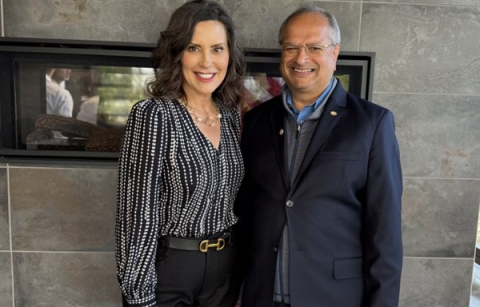
Another milestone was the signing of Medicaid legislation by Governor Gretchen Whitmer. These reforms expanded access and modernized coverage, offering new opportunities for vulnerable populations to receive care. I was honored to stand alongside the Governor and healthcare leaders during the signing ceremony. The event underscored the importance of physician voices in shaping policy decisions that directly affect patient care. Medicaid reform is complex, balancing fiscal responsibility with equitable access, but MSMS ensured that physicians were at the table, advocating for solutions that prioritize patients.
Bipartisan Legislative Outreach
Through seven months of my presidency, I engaged legislators across the political spectrum, including the Speaker of the House and members of both parties in the Michigan Legislature. These meetings were candid, constructive, and essential. Healthcare policy must transcend partisanship. By engaging leaders on both sides, MSMS advanced a message of unity: that patient well-being is the common ground upon which all policy should rest. Whether discussing scope of practice, Medicaid, or broader public health initiatives, our conversations demonstrated that physicians can serve as trusted, nonpartisan advisors in shaping laws that affect every Michigander. This bipartisan outreach strengthened MSMS’s credibility and reinforced the principle that healthcare advocacy is most effective when rooted in collaboration rather than division.
Mentoring the Next Generation of Advocates
Equally rewarding was the opportunity to mentor medical students in advocacy. Through lectures, workshops, and interactive sessions, I guided them in understanding the legislative process and the power of physician engagement. Their enthusiasm was inspiring. Many students expressed that advocacy training opened their eyes to the broader responsibilities of physicians beyond clinical care. They recognized that their voices matter—not only in exam rooms but in committee hearings, public forums, and policy debates. Mentorship in advocacy is not an optional exercise; it is a professional obligation. By equipping future physicians with the tools to engage in policy, we ensure that the profession remains strong, resilient, and capable of shaping the healthcare landscape for generations to come.
National Policy Shifts and Rising Costs
Beyond Michigan, national developments weighed heavily on our work. The lapse of Affordable Care Act subsidies will lead to rising premiums for many families, exposing the fragility of our healthcare financing system. Patients face difficult choices, and physicians will be witnessing firsthand the consequences of affordability challenges. These developments underscore the urgency of sustainable solutions that protect access while maintaining quality. Physicians cannot remain silent as patients struggle with rising costs. Our leadership is critical in shaping reforms that balance affordability, equity, and excellence.
MSMS has consistently advocated for policies that strengthen coverage, reduce financial barriers, and preserve physician-led care. As subsidies lapse and premiums rise, our voice becomes even more essential in national and state debates.
Broader Reflections on Physician Leadership
This year reaffirmed that physician leadership is indispensable in healthcare policy. Whether defending scope of practice, shaping Medicaid reforms, or mentoring students, physicians bring unique expertise, credibility, and compassion to the table.
Our profession is not immune to challenges—workforce shortages, burnout, and financial pressures persist—but our collective strength lies in unity. By standing together, we amplify our voice and protect the integrity of care.
MSMS has demonstrated that advocacy is not reactive but proactive. We do not wait for crises to unfold; we anticipate challenges, mobilize resources, and engage stakeholders. This proactive approach has positioned MSMS as a trusted leader in Michigan’s healthcare landscape.
Looking Ahead
As I conclude my term in April 2026, I am energized by the unity of our profession and hopeful for the future. The challenges ahead—rising costs, shifting policies, and evolving care models—demand vigilance, but the collective strength of our physician community assures me that we are prepared to meet them.
Michigan has the potential to serve as a national model for equitable, physician-led, and patient-centered care. By embracing innovation, fostering collaboration, and prioritizing patient safety, we can transform our healthcare system into one that is resilient, accessible, and sustainable.
Conclusion
This year has been marked by advocacy against unsafe scope expansions, collaboration on Medicaid reforms, bipartisan legislative dialogue, mentorship of future physician leaders, and sobering reflections on national policy shifts. Serving as President of MSMS has been the honor of a lifetime. I have gratitude for the colleagues, legislators, students, and patients who inspire me daily. I am proud of what we accomplished together and confident that MSMS will continue to thrive under future leadership. The work of advocacy never ends. As physicians, we must remain steadfast in our commitment to patient safety, equitable access, and the integrity of our profession. The challenges are great, but so too is our resolve.
Michigan physicians have proven that when we stand together, we can shape policy, protect patients, and inspire the next generation. That is the legacy of this year, and it is the foundation upon which we will continue to build.
Amit Ghose, MD, President